Let’s be honest: when your roof is leaking or your basement is flooding, your first thought isn’t, “Let me verify that contractor’s surety bond and workers’ compensation limits.” You just want the problem fixed.
But here’s the hard truth: skipping those steps is how small problems turn into financial disasters. Hiring an unlicensed or uninsured contractor is one of the biggest—and most expensive—risks a homeowner can take.
At FREEthR, we believe an informed homeowner is a protected homeowner. This guide will break down the often-confusing world of contractor licensing and insurance. We’ll explain what these terms really mean, why they’re non-negotiable for your protection, and what you need to know if you’re in Missouri, Illinois, Texas, or Oklahoma.
The Two Pillars of Contractor Credibility: Licensing & Insurance
Think of these as the foundation of a trustworthy professional. If one is missing, the whole structure is unstable.
1. Contractor Licensing: Your Guarantee of Basic Competence & Accountability
A license is a state or local government’s way of saying, “This person has met the minimum standards to do this job safely and legally.”
What It Means for You:
- Proof of Knowledge: To get a license, contractors usually must pass an exam proving they understand trade practices, safety protocols, and building
- Legal Recourse: If something goes terribly wrong, you have a regulatory body (like the Missouri Division of Professional Registration or the Texas Department of Licensing and Regulation) to file a complaint with. They can investigate, fine, or revoke the With an unlicensed worker, your main option is a costly civil lawsuit.
- Permit Pulling: Legally, only licensed contractors can pull required building permits for your project. If a contractor says, “You can pull the homeowner permit,” see it as a major red flag. It often means they aren’t licensed, and it makes you liable for the work passing inspection.
Key Terms You’ll Hear:
- General Contractor (GC): Oversees the entire project, hiring and managing subcontractors (like electricians or plumbers). Requirements vary widely by
- Journeyman Master: A Journeyman is a trained worker who can perform the trade under supervision. A Master has advanced experience, has passed a higher-level exam, and is licensed to run a business, pull permits, and supervise others.
- “Handyman” Exemption: Most states allow unlicensed individuals to do small, low-cost jobs (e.g., under $1,500 in Missouri). This is NOT for roofing, electrical, plumbing, or HVAC.
2. Contractor Insurance: Your Financial Safety Net
A license doesn’t protect your wallet. Insurance does. There are two critical types:
A. Liability Insurance (Also called General Liability)
- What it is: This protects your property from accidental damage caused by the
- Real-World Example: A roofer drops a bundle of shingles through your bay window. Their liability insurance should cover the cost to repair your window. Without it, you’d be arguing with the roofer while staring at the hole in your
B. Workers’ Compensation Insurance
- What it covers: This covers medical bills and lost wages for an employee who gets hurt on your property.
- The Critical Reason You Need It: If a worker without “workers’ comp” falls off a ladder at your home, you could be held liable for all their medical expenses and lost Your own homeowner’s insurance may deny the claim, leaving you personally responsible for a life-altering sum.
Key Term:
- “Certificate of Insurance (COI):” This is the document you must ask for. Don’t just take their A valid COI is issued by the insurance company and lists the policy types, limits, and expiration dates. At FREEthR, we verify this annually for every pro in our network.
State-by-State Spotlight: MO, IL, TX, & OK
While the principles are universal, the details matter. Here’s a quick guide to the landscape in our key states.
Missouri & Illinois: Local Focus
- Licensing: There is no statewide license for general contractors in MO or IL. Licensing is handled at the municipal (city/county) level. A roofer licensed in Louis may not be licensed to work in Chesterfield. Always check local requirements.
- The Exception: Specialized Both states do require strict state-level licensing for Plumbers and Electricians. This is for public safety.
- Insurance: Requirements vary by locality, but carrying both Liability and Workers’ Comp is a standard marker of a legitimate professional.
Texas & Oklahoma: State-Regulated
- Licensing: Both Texas and Oklahoma have statewide licensing requirements for specific trades.
- Texas: Roofing contractors require a Texas Roofing Contractors License through the TDLR. General contractors do not have a state license.
- Oklahoma: Requires a license for Roofing, Plumbing, Electrical, and Mechanical (HVAC)
- Insurance: State law in both TX and OK requires contractors to carry insurance, and they must provide proof to get and renew their The Texas Windstorm Insurance Association (TWIA) also has specific requirements for roofers working on the coast.
A Note on Storms: After major hail or wind events, out-of-state contractors flock to regions like Dallas-Fort Worth or Oklahoma City. They must obtain a reciprocal license to operate legally. Always verify that a storm chaser is licensed in your state, not just their home state.
Trade-by-Trade Guide: What to Look For
- Roofing, Siding, & Gutters (MO/IL): Check for a local city license/business license. Require proof of Liability Insurance and Workers’ Comp. In TX/OK, demand their state roofing license number and verify it online.
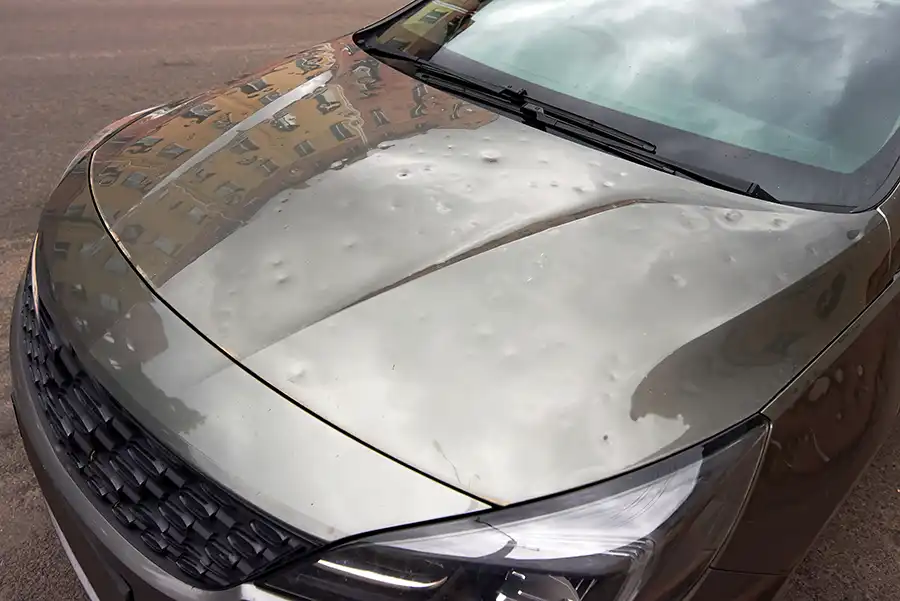
- Paintless Dent Repair (PDR): This is a newer, specialized field. Licensing is often less defined. Therefore, insurance verification is even more critical. A professional PDR tech should have Garagekeeper’s Liability insurance (for your car on their premises) and standard liability.
- Electrical & Plumbing: In all four states, this work must be performed by or under the direct supervision of a state-licensed Master or Journeyman. Never allow a general handyman to “tweak” your wiring or pipes.
- HVAC: Requires a state license in OK and for certain work in TX. In MO and IL, check for local licensing and, crucially, for EPA Section 608 Certification (legally required to handle refrigerant).
- General Contractors: For large projects (room additions, full remodels), your due diligence is highest. They must pull permits and coordinate licensed subs. Require a detailed contract and verify all subcontractors’ licenses and
The FREEthR Shield: How We Handle This For You
Verifying all of this is a time-consuming, confusing job. It’s exactly the job we’re built to do.
- We Demand the Documents: Before any contractor joins our network, they must provide current, valid proof of all required licenses and insurance.
- We Verify, Not Just Collect: We check license numbers against state databases and confirm insurance certificates directly with providers.
- We Keep It Current: We re-verify A policy that lapsed yesterday means no bids today.
- We Give You the Summary: When you compare bids on our platform, you’ll see the verified credentials of each pro, giving you confidence at the moment of
You don’t need to become an expert in contractor law. You just need to work with a partner who is.
Protecting your home starts with protecting yourself. Let FREEthR be your shield, so you can focus on the result—not the risk.
Disclaimer: This article is for informational purposes and does not constitute legal advice. Licensing and insurance requirements change. Always confirm current regulations with your local building department or a qualified professional.